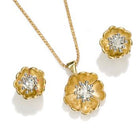
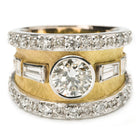
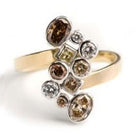
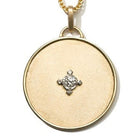
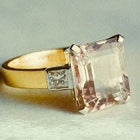
Diamonds are precious, a symbol of eternal love - That's what makes your diamond a one off.
What to look for
The value and desirability of natural diamonds is determined by four key factors:
- Clarity - not surprisingly, the closer a diamond is to a flawless condition, the higher it’s value. Conversely, the more inclusions (irregularities or marks) it has, the lower it's value. Some larger inclusions can be seen by the naked eye.
- Cut - diamond cutting requires great skill to achieve the best results. And the most skilful cutters take account of the individual characteristics of each one to achieve optimum brilliance and the ideal proportions to maximise the reflection of light from the back facets.
- Colour - Most diamonds are colourless, with the Exceptionally White Plus (D) at the top end of the scale. While tints of colour tend to depress value, some colours (like deep red) can command super high prices, especially when the colour is very intense - these are known as Fancy Coloured Diamonds. Black and yellow diamonds are now also more popular.
- Carat - Although popularly thought to relate to size, the carat is a unit of weight. And the reason is because there's a relationship between size and weight. So, a 1 carat diamond with ideal proportions has a corresponding diameter of 6.5mm. But as we know, the biggest (or heaviest) isn't always the best, the other quality factors must also be taken into account.
Ethical Sourcing
The issue of 'conflict' diamonds (ie diamonds which funded wars in Angola and Sierra Leone) is one that the trade has worked hard to eradicate. Indeed, since the introduction of the UN Kimberley process of certification, the supply of diamonds is now 99% conflict-free. Chenevix Jewellery only buys diamonds from established reputable dealers so you can be assured that your diamonds have been ethically sourced.
Natural Diamonds
Although treated or synthetic diamonds may look genuine - even to the expert eye - there's no substitute for the real thing which will be reflected in the price. One must be aware that although it has taken some years to perfect, laboratory grown diamonds of a good size and gem quality, are now entering the market. This process must be declared and the price adjusted accordingly. Because it's so difficult to tell whether a diamond has been treated to remove inclusions, it's vital to buy from a trusted source. That's why Susannah only buys natural diamonds from credited and trusted suppliers who abide by the Kimberley Process.
Caring for Diamonds
As with anything precious, it's important to know how to care for diamond jewellery. So here are a few, but essential dos and don'ts:
- Don't allow any sharp impacts or knocks, as the mounting might become damaged
- Don't let diamonds rub against each other, which could cause abrasion
- Do ensure any stones which become loose are re-fixed by a jeweller without delay
- Do use only a mild detergent in a bowl of warm water for cleaning. After soaking use a small paintbrush or soft toothbrush to remove dirt and oils, rinse in clean water and polish with a tissue or lint free cloth. Always check the bowl before discarding the water as diamonds can be dislodged during the cleaning process.
© Susannah Chenevix-Trench